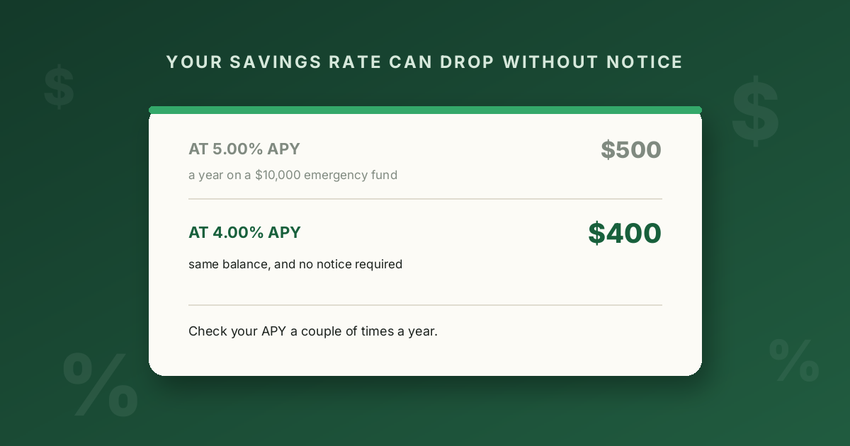
A couple of years ago you might have opened a savings account advertising 5.00% APY, parked your emergency fund in it, and felt good about the decision. (If you haven't moved yours out of checking yet, here's why it belongs in a HYSA.) If you haven't looked at the account since, there's a decent chance…
CD Ladders: The Savings Tool for Money You’ll Need in a Year or Three, Not Tomorrow
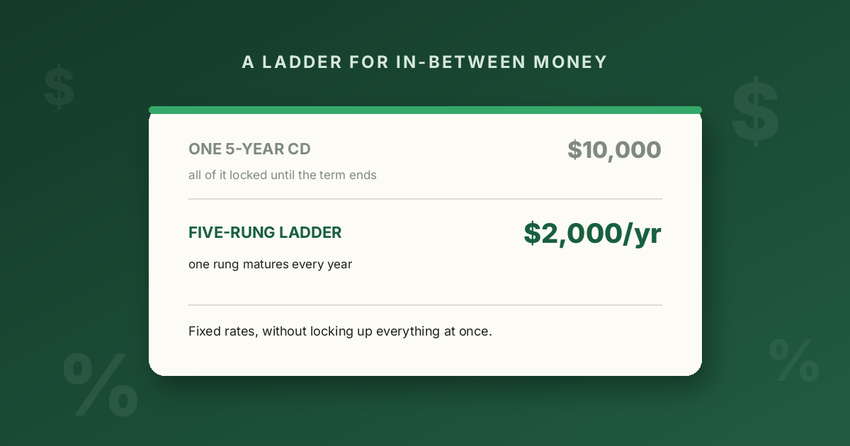
Most beginner savings advice sorts your money into two buckets: cash you might need any second (emergency fund, high-yield savings account) and money you won't touch for decades (retirement accounts). There's a gap in between that nobody talks about much — money you know you'll need, just not right now. A wedding in 18 months.…
Where I Bonds Fit Into a Beginner’s Savings Plan (and Where They Don’t)
Most people who've built up a decent cash cushion eventually run into the same puzzle: the emergency fund is funded, the high-yield savings account is earning a respectable rate, and there's still money sitting around that doesn't quite belong anywhere yet. It's not retirement money. It's not "I need this next month" money. It's the…
Why Your Emergency Fund Should Live in a High-Yield Savings Account (Not Your Checking Account)
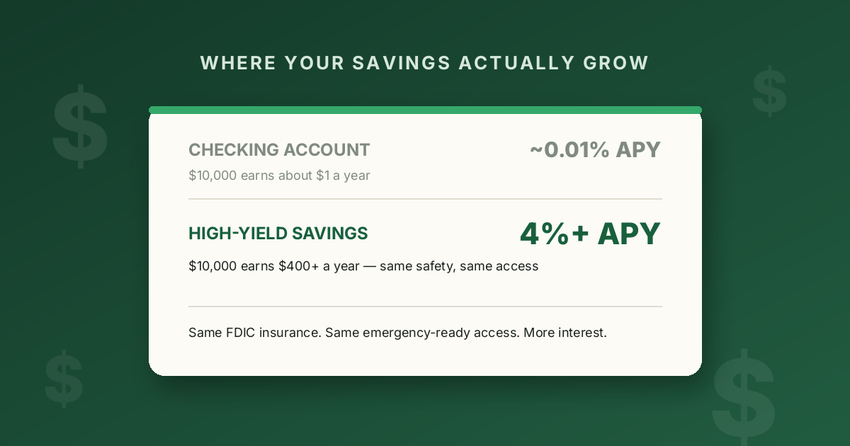
Most people know they're supposed to have an emergency fund. Fewer people think carefully about where that money actually sits — and that oversight can quietly cost hundreds of dollars a year. If your "emergency fund" is really just a padded balance in your everyday checking account, you're not doing anything wrong, exactly. But you're…
Building Your First Emergency Fund: How Much Is Really Enough?
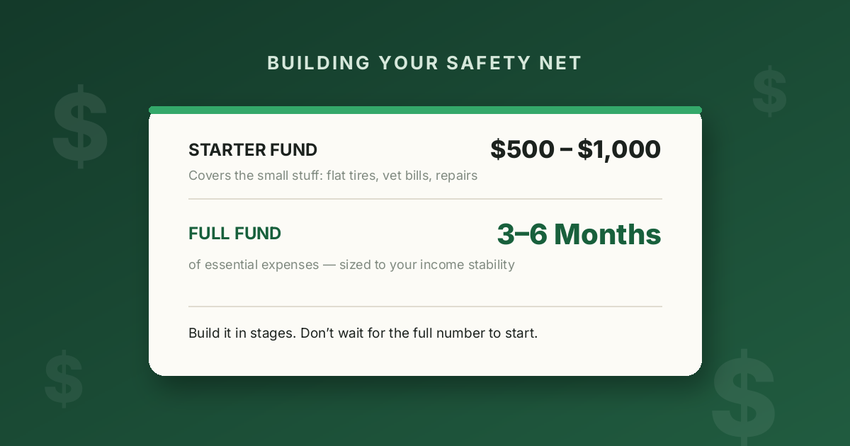
Ask five people how big your emergency fund should be, and you'll probably get five different answers: three months of expenses, six months, a flat $1,000, or "as much as possible." That kind of vague advice is part of why so many people never actually start one. It feels like an impossible moving target, so…
Category: Saving
Too Many Accounts? A Simple Account Setup That Runs Itself
You have a checking account from college, another one from when you switched jobs, a savings account at a bank you don't remember choosing, two credit cards, and an online savings account you opened for the rate. Your paycheck lands in one place, rent comes out of another, and every few weeks you move money…
Online Impulse Buying: Saved Cards, One-Click, and Buy Now, Pay Later
It's 11:40 p.m. and you're scrolling. An ad shows you a jacket, the site already knows your address, your card fills itself in, and the checkout page offers to split the $160 into four payments of $40. You tap once. By the time the confirmation email arrives, you've half forgotten what you ordered.
Hidden Bank Fees: How to Find Them and Get Them Waived
You probably know your rent and your car payment to the dollar. But ask what your bank charged you last year and most people have no idea. That's because bank fees rarely arrive as a bill. They show up as a short line on a statement you skim: “MAINT FEE,” “NON-NETWORK ATM,” “PAPER STMT,” “INTL…
Stop Impulse Buying in Stores: The Waiting-Period Rule
You run into the store for toothpaste and a gallon of milk. Forty minutes later you're at the register with a throw pillow, a new water bottle, two candles that were on an endcap, and a phone charger you might already own. The total is $83. The toothpaste was $4.
Cutting Your Grocery Bill With Unit Prices and a Price Book
You grab the big jar of peanut butter because big jars are always the better deal. You buy the cereal with the yellow sale tag because it says “SAVE $1.50.” At checkout the total is higher than you expected, again, and you're not sure where it went wrong.
Subscription Creep: Finding and Canceling Recurring Charges You Forgot
You signed up for a free trial of a streaming service to watch one show. You added cloud storage when your phone filled up. A meditation app, a news site, a fitness class with a monthly membership you meant to pause. None of them felt expensive on its own, which is exactly why you stopped…
Saving When Nothing Is Left Over: Finding Your First $50 a Month
You've read the advice to save 20% of your income. You've done the math, and after rent, groceries, gas, the phone bill, and the minimum on your card, there's nothing left. Some months there's less than nothing. Saving sounds like something for people with more room than you have.
Which Spending Cuts Are Worth It: Rank by Annual Dollars, Not Guilt
You've been trying to be frugal. You stopped buying coffee on the way to work, you feel bad every time you order takeout, and you've cancelled a streaming service or two. But when you look at your bank balance at the end of the month, it doesn't look much different. You're working hard at cutting…
Do You Need a Budgeting App? How to Choose One and Keep Your Bank Login Safe
You've decided to get serious about tracking your money, and every list online says to download an app. Maybe you used Mint years ago and never replaced it. Now every option wants a subscription, and every one asks you to connect your checking account. You're not sure whether you need one at all, or what…
How to Lower Your Internet, Phone, and Insurance Bills Without Downgrading
Your internet bill was $50 when you signed up. Then the promotional rate ended, a “network fee” appeared, and now it's $85. Your car insurance renewed last spring at a higher price, and you paid it because the email said “no action needed.” Your phone plan includes far more data than you use, but switching…