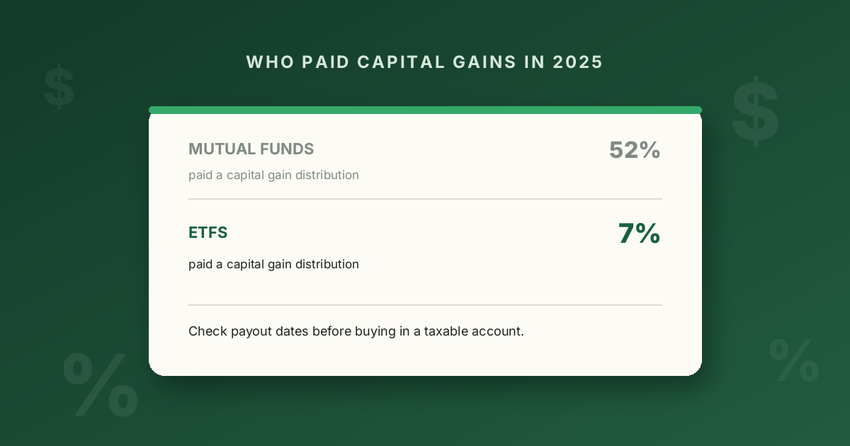
Every winter, a chunk of mutual fund investors get a surprise: a tax form showing capital gains, sometimes thousands of dollars' worth, even though their account balance is flat or down for the year. Nothing was sold. No trade was placed. The gain shows up anyway, because the fund itself sold something inside its portfolio…
Why Your “Safe” Bond Fund Lost Money: Understanding Duration
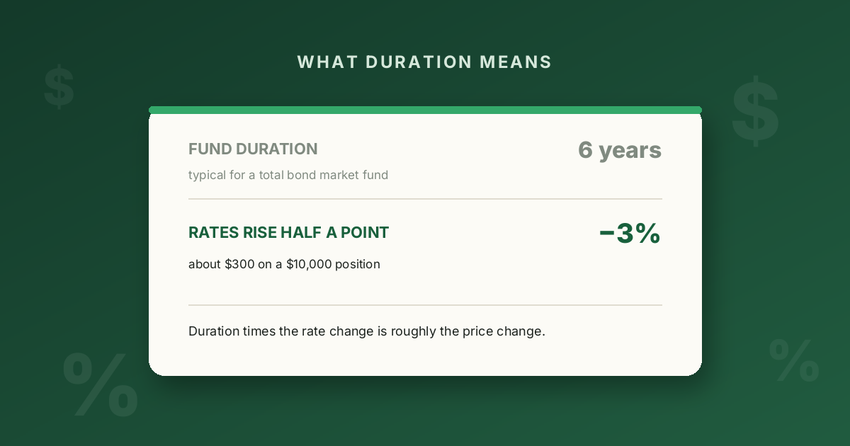
A lot of new investors put money into a bond fund expecting it to behave like a savings account with slightly better interest. Then 2022 happened: the Bloomberg US Aggregate Bond Index, the benchmark that most "total bond market" funds track, fell about 13% for the year, its worst calendar year on record. People who'd…
The Fee You Never See: Why 0.05% and 0.64% Aren’t the Same Ballpark
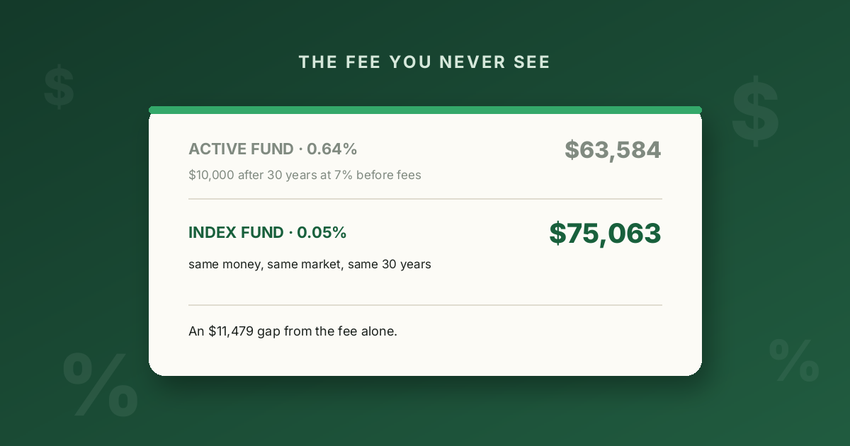
You will probably never receive a bill for the fees on your index fund or mutual fund. There's no invoice, no line item on a bank statement, no email reminder. The fund simply skims its expense ratio off the top every single day, shaving it out of the fund's net asset value before you ever…
Category: Investing
Same Portfolio, Different Tax Bill: Why the Account Matters as Much as the Investment
Two people can own the exact same mix of stocks and bonds — say, 70% in a total stock index fund and 30% in a bond fund — and end up with meaningfully different amounts of money in their pockets after taxes, purely because of which account each fund sits in. One person parks the…
Your HSA Can Invest Like a Brokerage Account — Most People Never Turn It On
If you have a health savings account through work, there's a good chance you've only ever used it the way you'd use a debit card: money goes in from your paycheck, money comes out at the pharmacy counter. That's not wrong, exactly, but it leaves most of the account's value on the table. An HSA…
Should This Money Be Invested at All? Matching Each Goal to Its Time Horizon
You've got some money saved, and everyone says your money should be “working for you.” Maybe you're saving for a house in two years, a wedding next summer, and retirement someday, all in the same account. And you're wondering whether to put the whole thing in an index fund.
The Urge to Sell When the Market Drops: What to Do Instead
You log in to your 401(k) and the balance is down $8,000 from last month. The news is all red arrows. You start doing the math on how much more you could lose, and a thought gets louder every day: sell now, protect what's left, buy back in when things calm down.
Investing Your First $100: Minimums, Fractional Shares, and Making Sure It Is Actually Invested
You've got $100 you can spare, and you've heard that you can't really invest until you have thousands. Or maybe you already opened an account, moved $100 in, and saw the balance sitting there. Either way, you're wondering whether $100 is enough to matter, and whether you've actually done it right.
Which Account to Invest In First: 401(k) Match, Roth IRA, or Brokerage
You've decided to start investing, and you've got maybe a few hundred dollars a month to work with. Then the choices pile up: your job offers a 401(k), everyone online says to open a Roth IRA, and a brokerage app keeps sending you notifications. Which one gets the first dollar?