
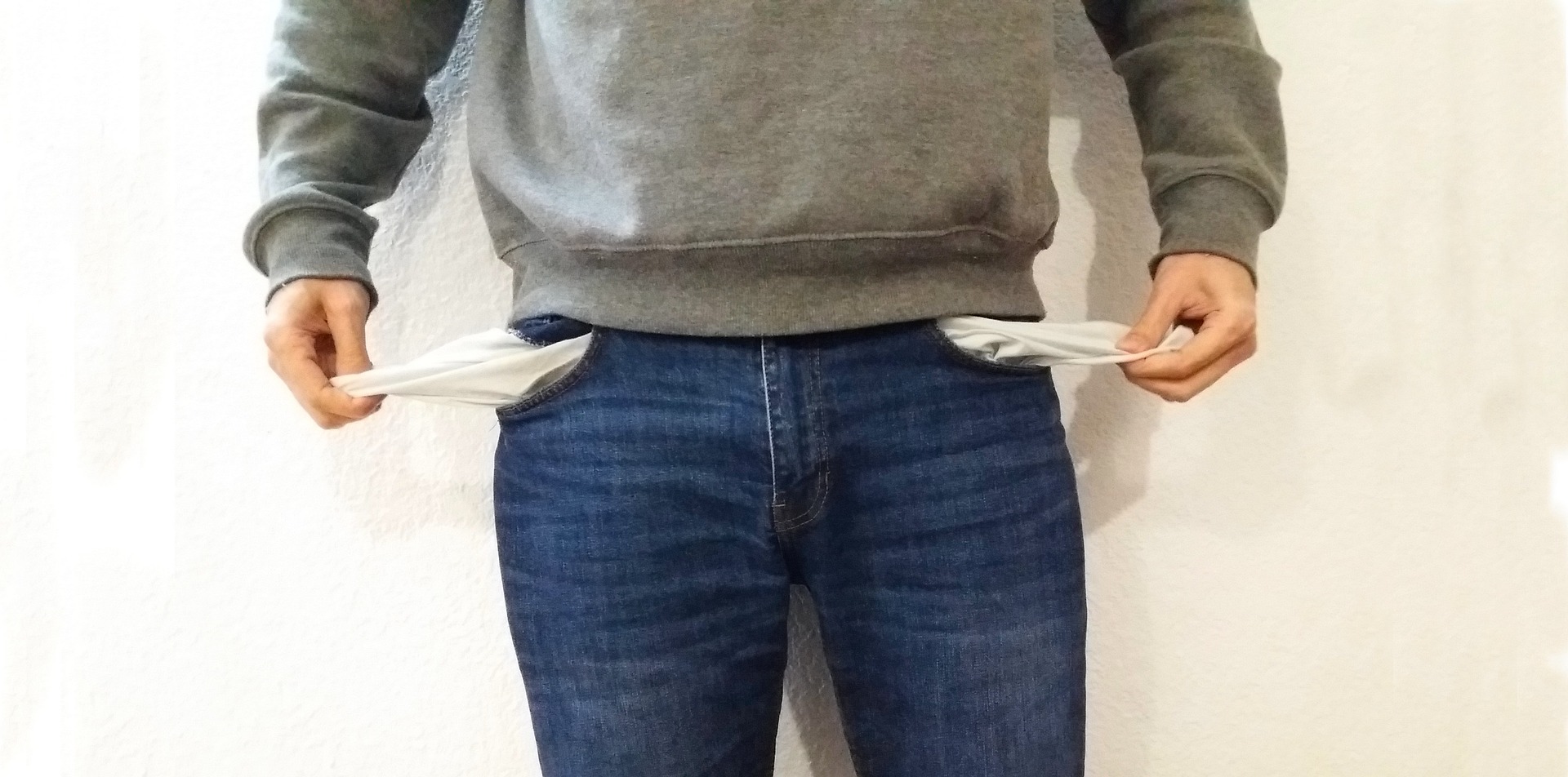
You had the money. That's the frustrating part. The credit card payment was due on the 3rd, your paycheck landed on the 5th, and you meant to pay it then. Or the electric bill auto-drafted two days before payday, your checking account dipped below zero, and a $12 streaming charge that hit the same afternoon turned into a second overdraft fee.
Most people who pay these fees regularly aren't overspending. They're running bills on memory, and memory doesn't know which day each bill drafts or which day the paycheck clears. The fix is a bill calendar: one page that shows every due date next to every payday, plus a small cushion for the days they don't line up.
What one bad month actually costs
These fees aren't small anymore, and the federal caps you may have heard about never took effect.
The CFPB finalized a rule in 2024 that would have cut most credit card late fees at large issuers to $8. A federal court in Texas vacated that rule in April 2025, so the older, higher limits still govern. WalletHub found the average credit card late fee in 2025 was $30.50, with a maximum of $41, as reported by the Associated Press.
Overdrafts are similar. A separate CFPB rule that would have capped overdraft fees at $5 for large banks was repealed by Congress and signed into law in May 2025. Bankrate's 2025 survey put the average overdraft fee at $26.77.
Example (illustrative): In one month you pay a credit card three days late and get charged $30.50. The same week, a utility draft overdraws checking and a small charge follows it, so you pay two overdraft fees of $26.77 each.
$30.50 + ($26.77 × 2) = $84.04 for one month.
If that happens four times a year, it's $336.16, money that bought nothing.
And the fee is the smallest part if a payment slides further. Card issuers can report a payment to the credit bureaus once it's 30 days past due, and that late payment can stay on your report for up to seven years. Under Regulation Z, an issuer can apply a penalty APR to your existing balance once you're 60 days late.
Build the calendar in one sitting
You need your last two months of bank and credit card statements and about 45 minutes.
- List every bill with a due date. Rent or mortgage, utilities, phone, internet, insurance, car payment, credit cards, student loans, subscriptions. Write the day of the month each one is due or drafts.
- Add your paydays. Use the day the money is actually available in your account, not the date printed on the pay stub.
- Mark which bills are on autopay and from which account.
- Add the non-monthly bills. Car registration, annual subscriptions, insurance billed every six months. Put them on the month they hit. These are the ones that blindside people, and sinking funds are how you pay for them without a scramble.
Lay it out as a simple list running from day 1 to day 31, or use a calendar app with recurring events. Then read it top to bottom and look for one thing: any stretch where the bills due before a payday add up to more than that paycheck.
Fixing the gaps: a worked example
Example (made-up figures): You're paid $1,600 on the 1st and the 15th. Your bills look like this:
- 1st: Rent, $1,100
- 5th: Credit card, $150
- 10th: Phone, $60
- 12th: Car loan, $320
- 14th: Electric, about $140 (varies)
- 20th: Car insurance, $110
- 22nd: Streaming, $25
Bills from the 1st through the 14th: $1,100 + $150 + $60 + $320 + $140 = $1,770. That's $170 more than the $1,600 paycheck covering that stretch. Bills from the 15th through the 31st: $110 + $25 = $135, against another $1,600.
You're not short on money. You're short on timing. Two fixes:
- Move a due date. Call the car lender and ask to move the payment to the 20th. Many lenders and most major card issuers will change a due date on request, though it isn't guaranteed and may take a cycle to take effect. Now the first window is $1,450 and the second is $455. Both fit.
- Hold a buffer. Keep a fixed cushion in checking that you treat as zero. A good size is your largest variable bill plus a little margin. Here, if the electric bill can swing to $250 in summer, a $300 buffer covers it.
If you keep a separate account just for bills, as in this simple bills, spending, and savings setup, the buffer lives there and your everyday spending can't eat into it.
Rules that work in your favor
A few protections still apply and are worth knowing:
- Weekend due dates. If your card's due date falls on a day the issuer doesn't receive or accept payments by mail, such as a weekend or holiday, a mailed payment received the next business day has to be treated as on time.
- Late fee size. A card's late fee can't be more than the minimum payment that was due.
- Debit card overdrafts are opt-in. Under Regulation E, your bank can't charge an overdraft fee on ATM withdrawals or one-time debit card purchases unless you opted in. If you're opted out, those transactions are generally declined instead. Checks and autopay drafts aren't covered by this rule, so they can still trigger fees.
Check the fix on your next two statements
On your next credit card statement, look at the fees section. The "Late fee" line should read $0, and the "Payment due date" should match the date on your calendar. On your checking statement, search for "overdraft," "OD," "NSF," or "returned item." You should find none.
Then look at your lowest daily balance for the month. Most banking apps show a running balance next to each transaction. The lowest point should never dip below your buffer amount. If it did, find the date it happened and look at your calendar for that day; that's the bill that needs to move or the buffer that needs to grow.
Check again after the second month, since a due-date change sometimes takes a full billing cycle to show up. After that, review the calendar any time you add a bill, change jobs, or switch pay schedules. Monthly maintenance and ATM charges are a different problem with different fixes, covered in how to find and waive hidden bank fees.
Calendar mistakes that bring the fees back
- Setting every autopay to the full statement balance from an account without a buffer. A large card balance drafting the day before payday is a classic overdraft trigger. Either keep the buffer or set autopay to the minimum and pay the rest manually after payday.
- Using the pay-stub date instead of the deposit date. If your money posts a day later than the stub says, every "safe" bill on payday is actually a day early.
- Opting back into debit overdraft coverage for convenience. A declined $6 coffee is annoying. A $6 coffee that costs $32.77 is worse.
- Forgetting the bills that don't come monthly. The annual renewal you didn't write down is the one that hits during a tight week.
- Assuming the old fee caps are still coming. Both federal caps are gone as of 2025. Budget as if the full fee applies, because it does.
If the calendar shows that there simply isn't enough income to cover everything, not just a timing gap, that's a different situation. Start with this triage order for what to pay first.
Check us out on 📺 You Tube 📺
Check out our Media Section: 📺 Media 📺
# The Late Fees and Overdrafts You Pay for Not Having a Bill Calendar
Discover more from Grow Beyond Green
Subscribe to get the latest posts sent to your email.