
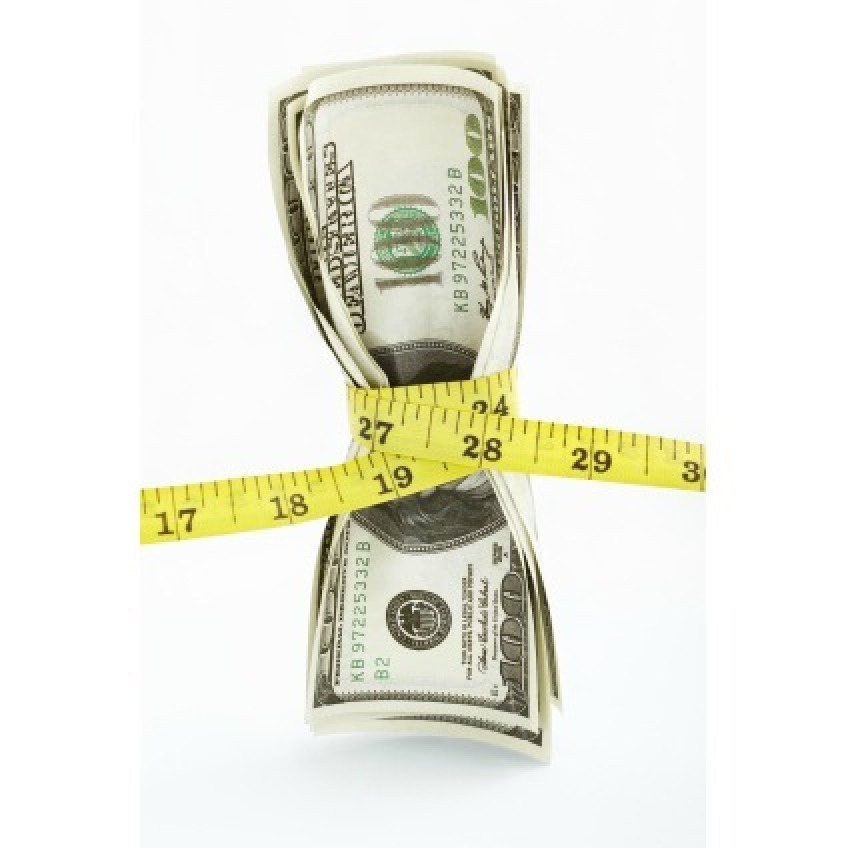
You've read the advice to save 20% of your income. You've done the math, and after rent, groceries, gas, the phone bill, and the minimum on your card, there's nothing left. Some months there's less than nothing. Saving sounds like something for people with more room than you have.
You're not unusual. In the Federal Reserve's survey of household finances, only 63 percent of adults said they'd cover a $400 emergency expense with cash or its equivalent in late 2025. The rest would have to borrow, sell something, or couldn't cover it at all.
The goal here is not 20%. It's $50 a month. That's $600 in a year, enough to handle a lot of the small emergencies that otherwise go on a credit card. And $50 is small enough to find without overhauling your life.
Why “cut back on everything” doesn't work
When there's no margin, the usual advice, spend less across the board, tends to fail. You're already cutting where you can, and vague goals like “eat out less” don't produce a specific number. Instead, look for $50 in a few concrete pieces. Each one has to be a specific change with a specific dollar amount, so you'll know whether it happened.
Where to look: three places that usually hold $50
First, if you don't actually know where your money went last month, spend a few minutes with your bank statement and sort charges into rough groups. A full 30-day spending audit is the thorough version, but even one month of statements is enough to start.
Then look in three places:
- One bill you haven't questioned in a year. Phone, internet, and insurance prices drift upward after promotions end. A single call or quote comparison can free up $10 to $40 a month without changing what you get.
- One recurring leak. A subscription you don't use, a fee your bank charges, an app you pay for and forgot. These are rarely large, but they're pure waste, and canceling takes minutes.
- One habit with a clear dollar amount. Not “eat out less,” but “bring lunch two days a week instead of buying it.” Choose something you can count and that you don't mind changing.
Don't try to change everything. Three moves, each with a number, is enough.
A worked example: finding $50 in a budget with no slack
Here's a made-up example. Example figures only. Someone takes home $2,400 a month and spends all of it.
- The bill: their phone plan is $65 a month for one line with unlimited data, but they use about 5 GB. A smaller plan on the same network costs $40. Savings: $25 a month.
- The leak: they pay $7.99 for a streaming service they haven't opened since summer, and a $5 monthly maintenance fee at their bank that goes away once their paycheck is set up as direct deposit. Savings: $12.99 a month.
- The habit: they buy lunch at work five days a week for about $11. Bringing lunch from home one day a week, at roughly $4 in groceries, saves about $7 per week. Over a month that's about $7 × 4 = $28, but call it $14 to be realistic about the weeks they forget.
Total: $25 + $12.99 + $14 = $51.99 a month. That's their first $50, and nothing they enjoy is gone.
Protect the $50 before it gets spent
Found money disappears fast if it stays in checking. The day after payday, move the $50, or $25 from each of two paychecks, into a separate savings account. Make it automatic so you don't have to decide each time; setting up payday transfers walks through how. Keep it somewhere you won't see on your debit card.
If you're already behind on a bill, saving can wait a month or two. Getting current comes first, and a triage order for what to pay first helps when there isn't enough for everything. Once you're caught up, start the $50.
Mistakes that kill a first savings habit
- Starting with a number you can't sustain. Saving $200 one month and then pulling it all back out the next teaches you that saving doesn't work. A smaller amount that stays put builds the habit.
- Leaving the money in checking. Money that sits next to your spending money gets spent, usually without you noticing. A separate account, even at the same bank, is enough of a wall.
- Counting savings you haven't verified. “I'll make coffee at home” saves nothing until it shows up as a lower balance on your statement. Track the specific charge you expected to disappear.
- Treating the first emergency as failure. If you use the savings for a car repair and avoid a credit card charge, that's the money doing its job. Refill it and keep going.
- Cutting everything at once. Dropping every comfort usually leads to a rebound splurge. Change three things, not thirty.
Check that it's actually working
- Next statement, each change: the phone bill should show the new plan price, the subscription charge should be gone, and the bank fee lines should be empty. If any of them is still there, follow up now.
- Savings balance, monthly: on the same day each month, check that savings went up by about $50. If it didn't, find out which piece didn't happen.
- After three months: you should have about $150 set aside. That's a good time to ask whether you can push it to $75. The longer-term goal, a full starter cushion, is covered in building your first emergency fund.
Check us out on 📺 You Tube 📺
Check out our Media Section: 📺 Media 📺
# Saving When Nothing Is Left Over: Finding Your First $50 a Month
Discover more from Grow Beyond Green
Subscribe to get the latest posts sent to your email.